Every month, we pick a LEGO photographer active in our community and share some of their work and a little about themselves. This month we travel to Spain to meet artoyfactory.
Hello, my name is Pedro Palazón-Candel, but you most likely know me in the LEGO community as @artoyfactory.
I am a software engineer and amateur toy photographer from Murcia, in southeastern Spain.
I started photographing toys as therapy to cope with the loss of my mother while playing with my two daughters. Since then, it has become my main creative escape from daily stress. I also run another account, @pedropcandel, where I post photos of other toys.
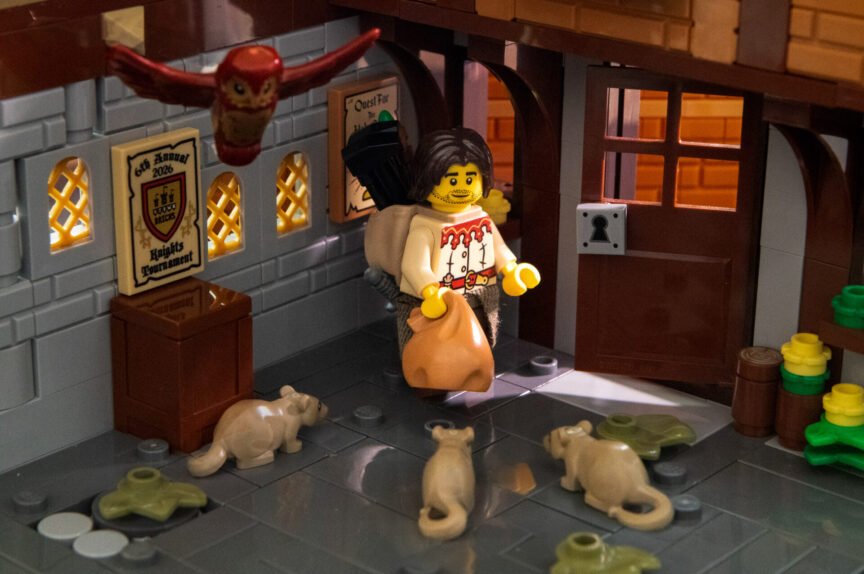
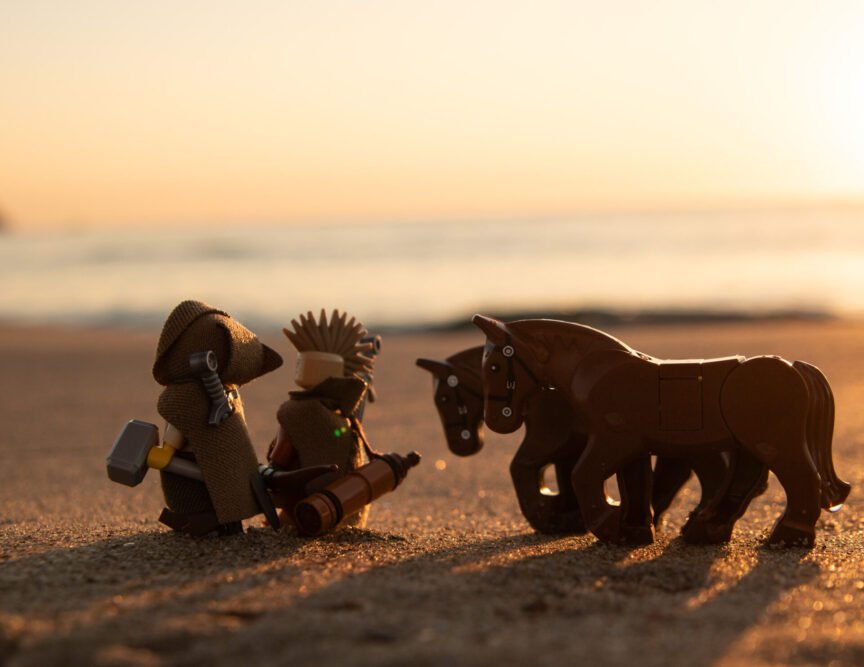
My photography style is shaped by where I live. Because the local landscape is arid, I build every scene by hand—combining Lego pieces with natural elements—with the sole exception of beach photos.
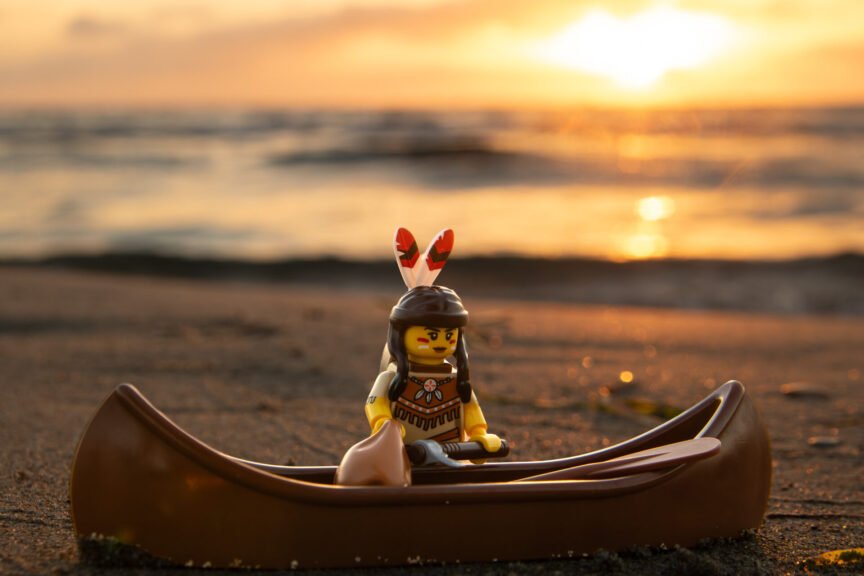
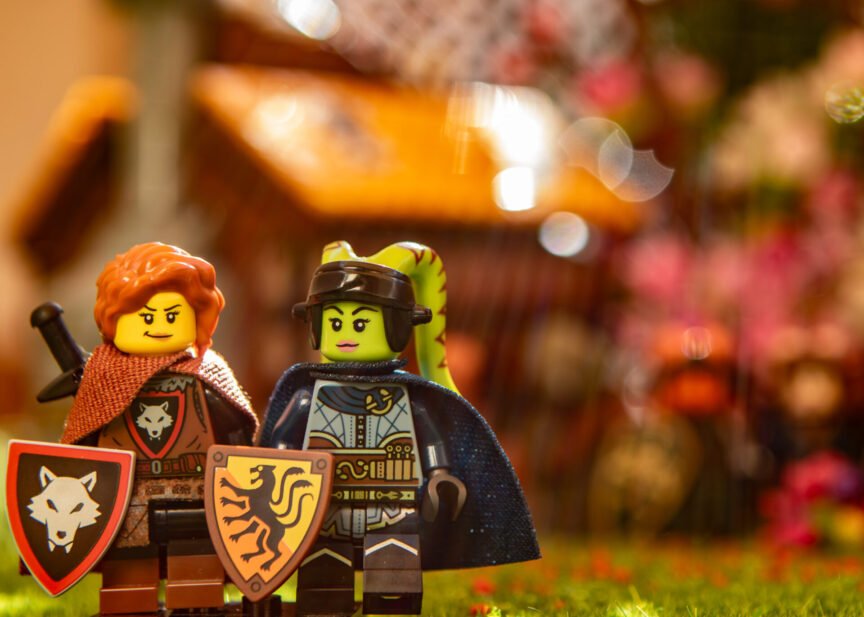
In general, I prefer shooting compositions with more than one minifigure. My main focus is usually medieval history and medieval fantasy, though I also enjoy Victorian, Western, Space themes, and practically anything that lets me mix those worlds together.
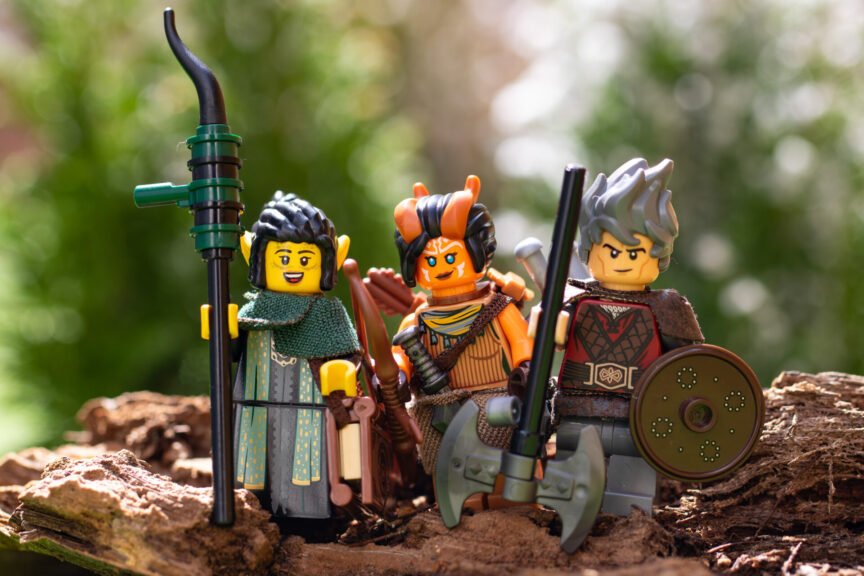
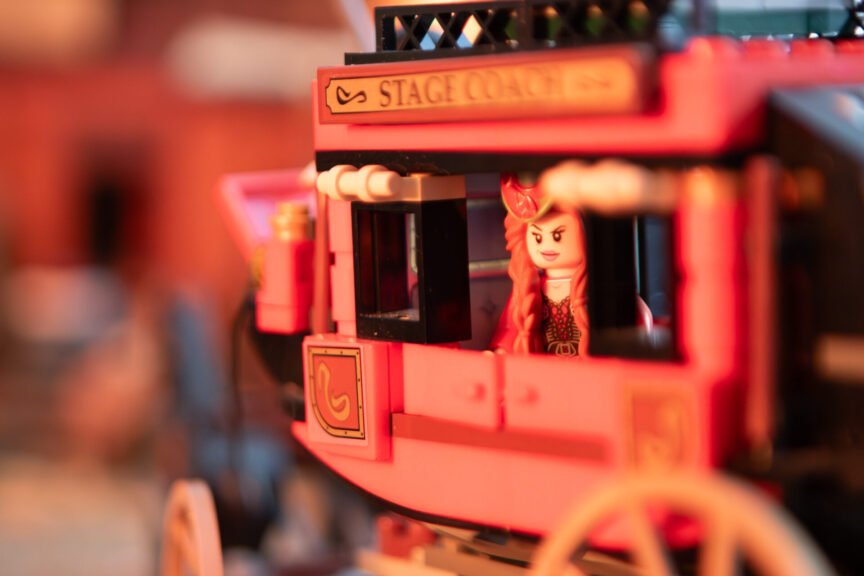
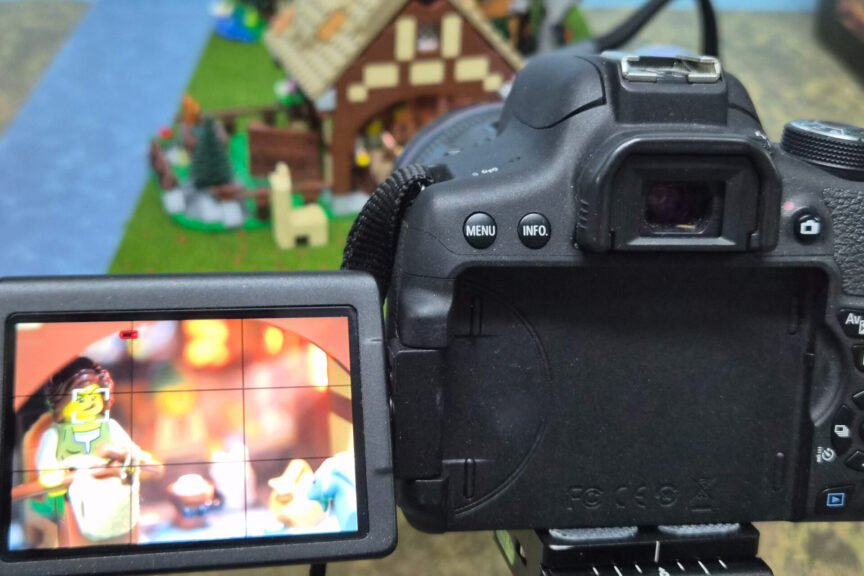
I shoot with a Canon EOS 750D and a Canon EF 24-70mm f/2.8L USM lens, mostly mounted on SmallRig tripods—including a tabletop model for ground-level angles. Depending on the shot, I work with natural light and a dual-tone reflector, or set up indoor lighting using continuous LEDs.
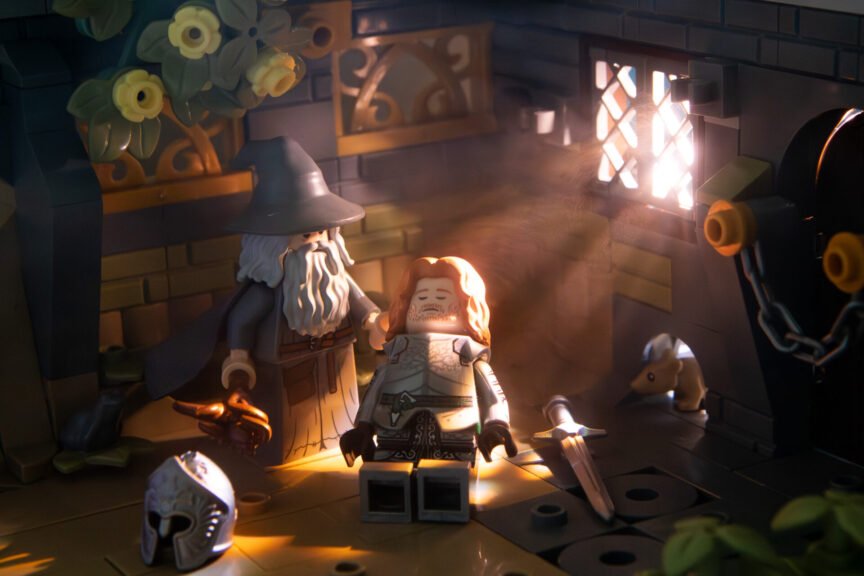
The Exclusive Photo
One of the things I enjoy most in toy photography is capturing sunbeams and experimenting with different solutions to compare results.
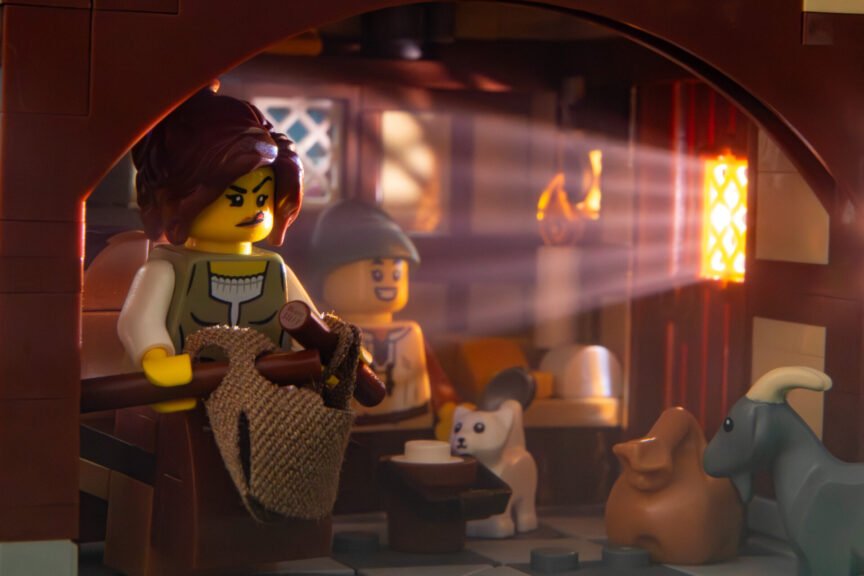
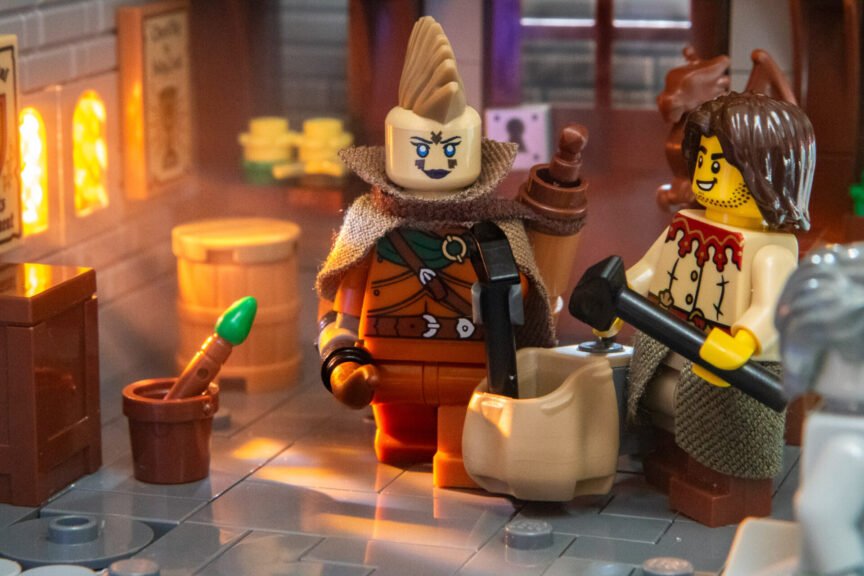
For this shot, I wanted something medieval tied to Spain. I used one of the buildings from the LEGO Icons Medieval Town Square and created a knitter scene, as knitting was introduced to Europe through Spain’s Al-Andalus during the 13th century.
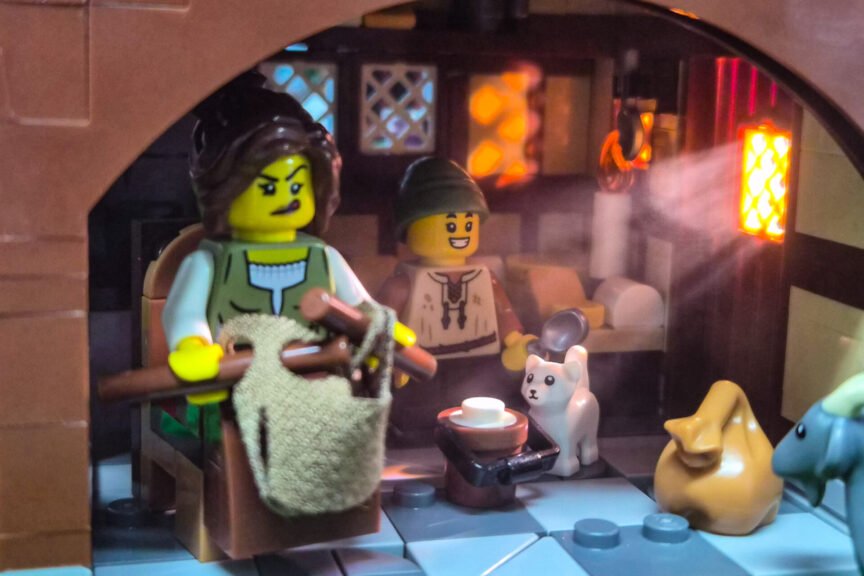
Recently, I’ve been practicing with a handheld face mister using homemade mixtures—instead of commercial fog machines—for photos of small MOCs. Having a chemistry degree probably explains why I enjoy this kind of DIY experimentation.
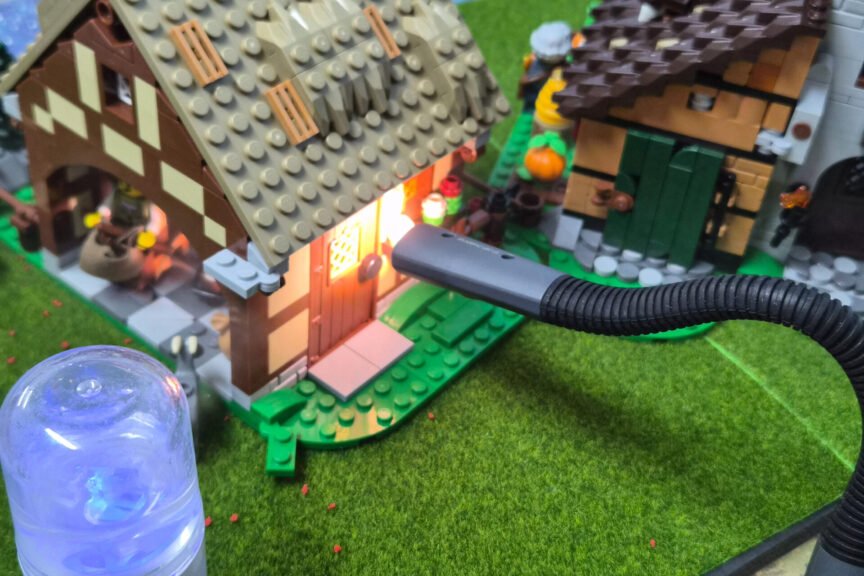
I’m really happy with the results so far. You don’t need thick fog to get atmospheric beams, and the gentle output of a face mister is more than enough. For this photo, I used a 1:3 ratio of propylene glycol to water.
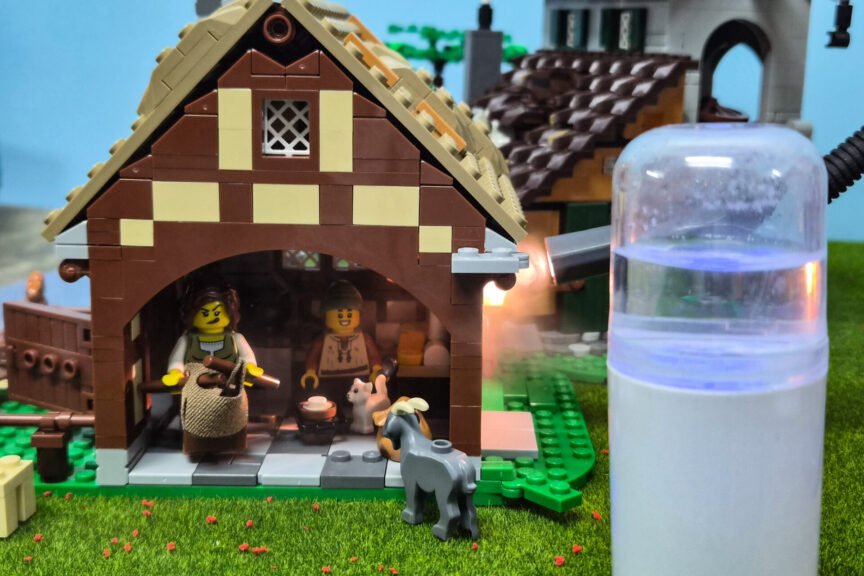
To achieve focused shafts of light, I initially used my phone’s flashlight, but I recently realized that reading lamps are far more versatile: they provide warmer light, adjustable intensity, and are much easier to angle precisely.
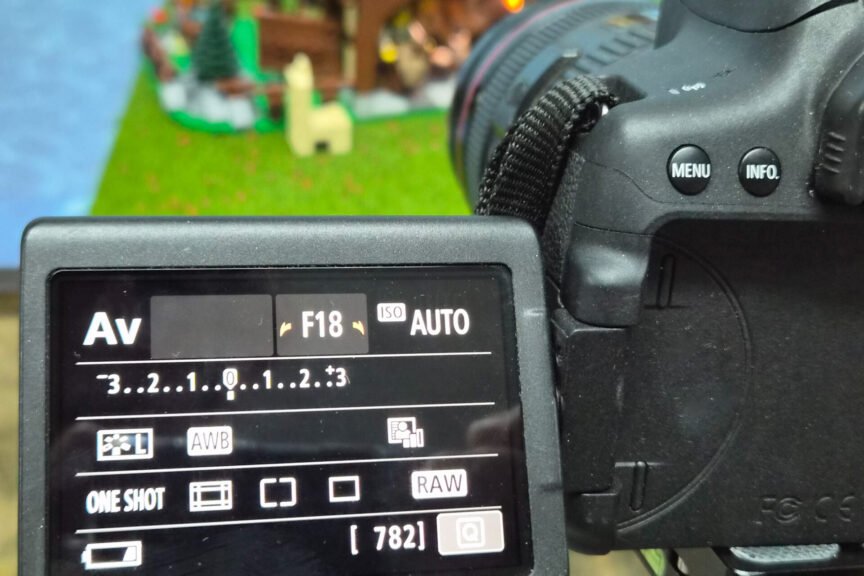
Finally, I keep photo editing to a minimum—just the bare essentials so it doesn’t feel like I’m back at work staring at a computer screen.